The 1994 Gold Proof £2 Bank of England Mule Error – A Modern British Rarity
The 1994 Gold Proof £2 Bank of England coin was struck to mark the 300th anniversary of the Bank of England. Designed by Leslie Durbin, the reverse shows the intertwined busts of King William and Queen Mary with the inscription Bank of England 1694–1994. It was the first time a commemorative £2 coin had been struck in gold proof, setting the stage for what should have been a routine issue.
Yet what followed was one of the most fascinating modern mistakes in British numismatics: the 1994 £2 Mule Error.
What is the Mule Error?
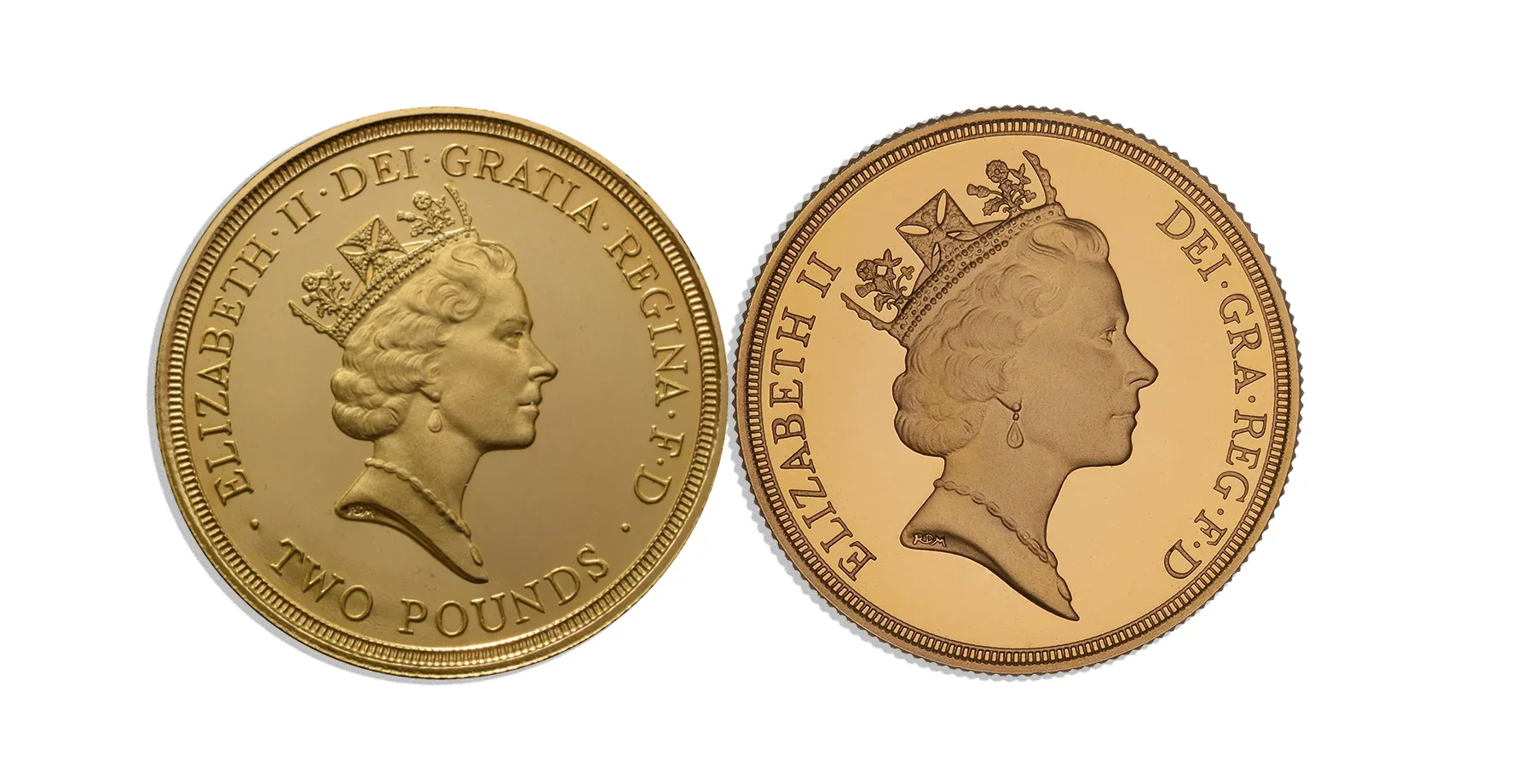
In coinage, a mule is when the wrong obverse die is paired with the reverse. In this case, instead of being struck with the correct Raphael Maklouf obverse portrait of Queen Elizabeth II that had been adapted for the commemorative £2, a batch was struck using the standard Maklouf obverse intended for regular issues.
This mistake resulted in coins where the portrait of the Queen does not match the special commemorative reverse. Once discovered, the Mint corrected the error, but not before a small number of pieces had been released in gold proof.

Why Collectors Prize This Coin
The rarity of the mule, coupled with its place in modern minting history, makes it one of the most desirable error coins in recent decades. Collectors prize it for three key reasons.
- Scarcity – Only a limited number of error-struck pieces exist, all in the hands of collectors.
- Gold Proof Finish – Struck in 22 carat gold (0.9167 fineness), the coin weighs 15.98g and displays the deep mirrors and frosted reliefs that define proof quality.
- Historical Significance – As the first modern commemorative £2 in gold, paired with a minting blunder, it stands as a milestone in contemporary British numismatics.
Grading and Authentication
Given its rarity, many surviving examples have been certified by third-party grading companies. The coin often appears in PF69 Ultra Cameo holders, signifying near-perfect preservation with outstanding contrast. Collectors should always look for graded and encapsulated examples to guarantee authenticity.
Where to Buy
For collectors interested in securing one of these elusive coins, Sovara Coins currently has an example available:
👉 1994 Gold Proof £2 Bank of England Mule Error Coin PF69 Ultra Cameo
This coin is graded by NGC as PF69 Ultra Cameo and encapsulated in its protective slab. Opportunities to purchase such a scarce modern rarity do not come often.
Final Thoughts
The 1994 £2 Bank of England Mule Error proves that mistakes can sometimes become treasures. For error specialists and proof sovereign enthusiasts alike, it is one of the most engaging and elusive coins of the 1990s. Its blend of rarity, gold proof beauty and historical intrigue ensures its place as a highlight of any advanced British collection.