That 'Rare Coin' Phone Call: Why So Many People Pay Thousands for Coins Worth a Fraction of the Price
If you or someone in your family has ever picked up the phone to hear an enthusiastic voice offering a "strictly limited" gold or silver coin tied to a royal jubilee, coronation, or historic anniversary, you've encountered one of the most effective — and least understood — sales tactics in the collectible coin market.
These calls are polished, the coins are usually genuine precious metal, and the paperwork looks official. So why do so many buyers only discover years later that they paid two, three, even four times what the coin is actually worth?
Here's how it works, and how to protect yourself or a family member.
How the Cold-Call Coin Pitch Works
Legitimate coin dealers wait for customers to come to them — through a website, a shop, a coin fair, or a referral. Telemarketing coin companies do the opposite: they proactively call people, often working from lists of retirees or previous customers, and lead with urgency.
The pitch usually follows a familiar pattern:
- A coin tied to an emotionally resonant event (a coronation, a royal birthday, a war anniversary)
- Language like "limited mintage," "strictly limited edition," or "official issue"
- A sense that the caller is doing the customer a personal favour by offering it before it "sells out"
- No mention of the word "investment" — because regulated investment products come with legal protections these coins don't have
None of this is illegal on its own. The coins are typically real gold, silver, or cupro-nickel, struck by legitimate mints. The problem isn't authenticity — it's price.
The Real Cost: What These Coins Are Actually Worth
Precious metal coins have two components of value: the melt value of the metal itself, and any collectible premium based on rarity, condition, and demand. Telemarketed "commemorative" coins are usually produced in large numbers specifically for this sales channel, meaning there's little genuine scarcity — despite what the word "limited" implies.
The result is a markup that has nothing to do with rarity and everything to do with the cost of the marketing campaign that sold it to you. Independent dealers and price-comparison sites have repeatedly found coins sold this way priced at two to three times what an established coin dealer would charge for the same or a comparable piece — and often well above what the coin could realistically be resold for.
This is the part that catches people out. A coin can be completely genuine and still be a poor purchase, because the price paid has almost no relationship to what any dealer will offer to buy it back for.
The "Alternative Mint" Trick: Coins From Places You've Never Heard Of
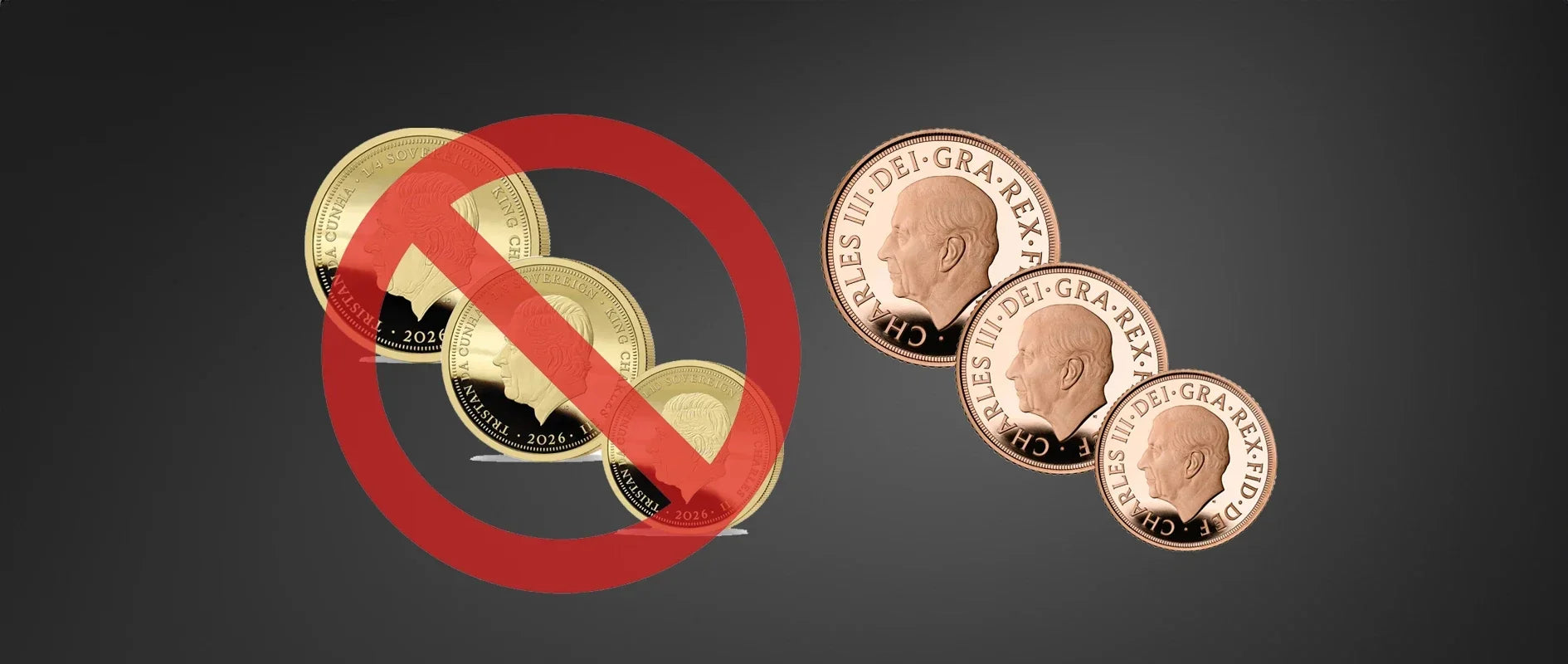
Look closely at the small print on many of these coins and you'll often find they weren't struck for the UK, the US, or any mint you'd recognise. Instead they're issued in the name of small overseas territories — places like Tristan da Cunha, the Pitcairn Islands, Niue, Ascension Island, or the Cook Islands. Tristan da Cunha, for context, has a population of around 250 people; nobody is using these coins to buy groceries. They exist almost entirely as a legal-tender designation that a private mint has arranged with the territory, purely so the coins can be marketed as "official legal tender."
This matters for three reasons:
There's essentially no secondary market. Established coin dealers and auction houses deal in coins with genuine collector demand — historic mint marks, verifiable rarity, an active community of buyers. Commemorative coins from obscure territories, struck in large numbers purely for a marketing campaign, generally don't have that. When you eventually try to sell, you may find few dealers are willing to buy at any price close to what you paid, simply because there's no real market for them beyond the original sales channel.
They're often cheaply produced relative to their price. Being "legal tender" says nothing about mintage quality or precious metal purity beyond what's stated. Many of these issues are struck by contracted private mints to a lower standard than something like a Royal Mint Sovereign or Britannia, while being sold at a similar or higher price point.
They usually aren't Capital Gains Tax exempt. This is the one people are most surprised by. In the UK, gold and silver coins are only CGT-exempt if they count as sterling currency — meaning they must be legal tender in the UK specifically (this is why Royal Mint Sovereigns and Britannias qualify, under TCGA92/S21). A coin that's "legal tender" in Tristan da Cunha or the Cook Islands is not legal tender in the UK, so it doesn't get that exemption. Buyers are frequently left assuming "legal tender" automatically means tax-free, when for these coins it simply doesn't apply.
None of this means the coin is fake. It just means "legal tender" is doing a lot of marketing work it doesn't do tax-wise or resale-wise.
Why This Disproportionately Affects Older Buyers
Regulators and consumer groups have repeatedly flagged that telemarketed collectible sales skew heavily toward older customers. A few reasons why:
Time and trust. Retired customers are more likely to answer unknown calls and have time for a longer conversation — exactly what a well-rehearsed sales script is built around.
Limited price-checking. Fewer older buyers cross-reference a coin's price against dealer listings or auction results in real time, which is precisely the step that would reveal the markup.
Emotional framing. Coins tied to royal occasions, wartime history, or personal milestones are marketed as much as keepsakes as they are as objects with a market price — which makes "is this a good deal?" feel like the wrong question to ask.
Continuity programmes. Many of these companies enrol buyers in ongoing coin subscription schemes, where a new coin (and charge) arrives every few months. These are often easy to join over the phone and considerably harder to cancel.
If you have a parent or grandparent who collects coins, it's worth an occasional, gentle conversation about who's calling them and what they've been buying.
What We Regularly See When People Come to Sell
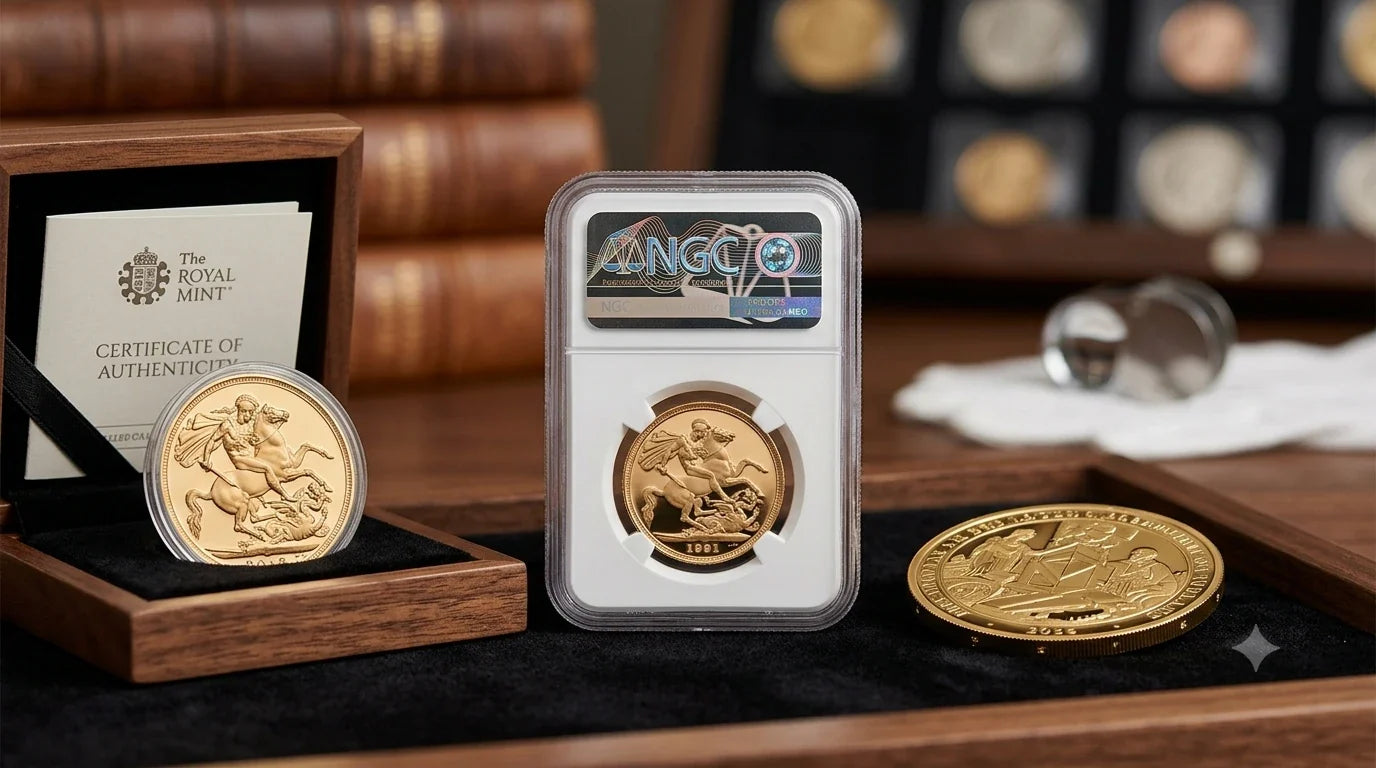
As a coin dealer, we get this conversation more often than you'd think: someone brings in — or emails us about — a coin bought years ago from a phone or mail-order marketing campaign, expecting it to have appreciated the way they were told it would. The certificate of authenticity is often beautifully presented. The presentation box is a nice touch. But when we assess the coin against melt value, genuine market rarity, and what buyers are actually paying for it today, it's frequently worth considerably less than what was originally paid — sometimes only a fraction.
It's an uncomfortable conversation to have, because the disappointment isn't about the coin being fake. It's about realising the price was never really about the coin.
Red Flags Worth Knowing Before You Buy
- You were contacted first. Reputable dealers don't need to cold-call you to sell a genuine collectible.
- Urgency and scarcity language ("only available this week," "strictly limited," "won't be offered again") pushes you to decide before you can compare prices.
- No independent grading or certification from a recognised third-party grading service (such as NGC or PCGS) backing up claims of rarity or condition.
- Vague or unverifiable mintage figures. "Limited edition" means nothing without a specific, checkable number.
- Pressure to decide on the call, rather than being encouraged to research and call back.
- Subscription or continuity enrolment buried in the pitch, where future coins are billed automatically.
- A company address that doesn't match where it claims to operate, or reviews describing a similar pattern of complaints.
- Issued by a territory you don't recognise (Tristan da Cunha, Pitcairn, Niue, Ascension Island, Cook Islands, and similar) rather than an established national mint — a sign of little genuine collector demand or secondary market.
- "Legal tender" claims with no mention of where. Legal tender in a small overseas territory is not the same as UK legal tender, and only UK legal tender coins qualify for the UK's Capital Gains Tax exemption.
How to Buy Collectible Coins the Right Way
- Check melt value first. For any bullion or gold/silver-content coin, look up the current spot price and weight, and know what the base metal value is before any collectible premium.
- Compare against established dealers and auction results, not just the price you're being quoted.
- Ask for independent grading if rarity or condition is part of the pitch.
- Take your time. Any legitimate offer will still be available tomorrow, or next week, after you've done your own research.
- Buy from a dealer you sought out, not one that sought you out.
Thinking of Selling a Coin You Bought This Way?
If you've got a coin — or a collection — that was bought through one of these marketing campaigns and you're wondering what it's actually worth, we're happy to give you an honest, no-obligation valuation. We'd rather tell you the real market value upfront than let you find out the hard way from someone else.
And if you're looking to start or grow a collection the right way, we price our coins against genuine market value — not against how compelling we can make a phone script sound.
Frequently Asked Questions
Are telemarketed coin companies illegal? Not necessarily. Most sell genuine precious metal coins from legitimate mints. The issue is pricing and sales tactics, not counterfeiting — though advertising regulators have taken action against specific misleading claims in this sector.
How do I know if a coin I already bought was overpriced? Compare its metal content and weight to the current spot price, then check what comparable coins sell for through established dealers or recent auction results. A significant gap between what you paid and what a dealer would offer to buy it back for is the clearest sign.
Can I get my money back if I feel misled? This depends on how the sale was made and what was promised. UK consumer protection rules (including cooling-off periods for certain distance sales) may apply — it's worth taking advice from Citizens Advice or Trading Standards if you believe you were misled.
Is it ever worth buying coins over the phone? Be cautious. Even when the coin itself is genuine, phone sales remove your ability to compare prices in real time, which is usually the entire point of the call.
Are all "legal tender" coins exempt from Capital Gains Tax in the UK? No. Only coins that are legal tender in the UK — such as Royal Mint Sovereigns and Britannias — qualify for the UK's CGT exemption. Coins that are legal tender in another territory (for example Tristan da Cunha, Niue, or the Cook Islands) don't qualify, regardless of how the sale describes them.
Why don't coins from small territories hold their value? Without an established base of collectors and dealers actively trading a coin, there's little to no functioning resale market. A coin can be genuine and still be extremely hard to sell for anywhere near its original price if serious buyers simply aren't interested in it.