The "Proof" Misconception: Why Proof is a Method, Not a Condition (and How Even NGC Gets It Wrong)
In the luxury watch world, there is a famous trap that catches almost every newcomer. If a watch is stamped "30 Metres Water Resistant," common sense tells you that you can dive 30 metres underwater with it. But any watchmaker will tell you the truth: 30m means it can handle light rain or a splash while washing your hands. It is a measure of dynamic laboratory test pressure, not real-world depth.
Numismatics has its own version of this exact trap. It centres around a single five-letter word that almost every gold collector thinks they understand: Proof.
Ask ten coin collectors to define a "Proof coin," and at least eight will say something like: "It’s a coin in perfect, mirror-like condition," or "It’s the highest grade a coin can receive."
Both answers are entirely wrong. And misunderstanding why can cost you hundreds—sometimes thousands—of pounds.
1. Proof is a Method of Manufacture, Not a State of Preservation
The single most important distinction to understand in coin collecting is that "Proof" describes how a coin was struck at the mint, not how well it has survived since.
A standard circulating coin (or a Brilliant Uncirculated issue) is struck once at high speed using automated machinery. A Proof coin, by contrast, is produced through an intensive, specialised manufacturing process:
- Hand-Prepared Dies: The coin dies are individually hand-polished, etched, or laser-treated to create high-contrast surfaces—typically frosted design motifs set against mirror-like polished fields.
- Polished Planchets: The metal blanks (planchets) are burnished in specialised tumbling media and hand-cleaned before being manually placed into the coining press.
- Multiple High-Pressure Strikes: Rather than a single rapid blow, Proof planchets are struck two, three, or more times at lower speed and higher pressure to ensure razor-sharp detail in the highest relief areas.
Because of this process, a newly minted Proof coin leaves the Royal Mint with stunning visual contrast. However, if you take that Proof coin, drop it on a desk, slide it across a table, or handle it with bare fingers, it will develop scratches, hairlines, and fingerprints.
The Reality Check: A worn or damaged Proof coin is still a Proof coin. Third-party grading services like NGC and PCGS regularly grade damaged Proof coins as PF50, PF45, or "PF Details - Scratched." Proof is the manufacturing method; the number (1 to 70) is the condition grade.
2. The Illusion of Finish: Proof vs. High-Relief BU
Where this technical reality gets truly fascinating—and where even seasoned dealers get tested—is when two entirely different manufacturing methods produce coins that look virtually identical to the naked eye.
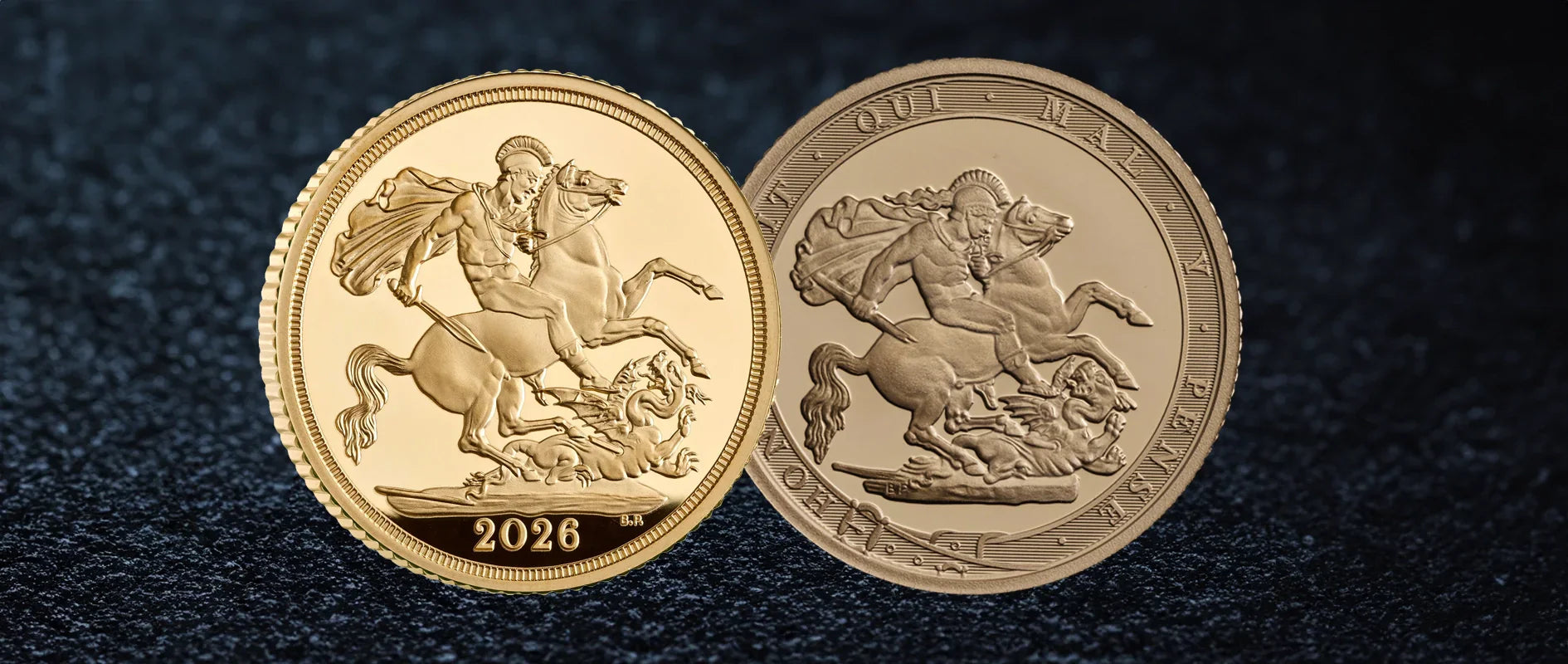
Consider the famous 2017 200th Anniversary Modern Sovereign series struck by The Royal Mint to mark the anniversary of Benedetto Pistrucci’s iconic 1817 Garter design.
To commemorate this landmark year, The Royal Mint released two distinct gold pieces that feature the full, original 1817 Garter belt design on a large 36.02mm planchet (weighing 39.94 grams of 22ct gold):
- The 2017 Quintuple Sovereign (£5) Proof: Issued exclusively in multi-coin Proof Sets (such as the 5-coin Proof Set), struck with deep mirror fields and heavy frosting.
- The 2017 £5 Gold Brilliant Uncirculated (BU): Issued as an individual, single presentation boxed coin.
Here is the trap: The Royal Mint’s BU strike for this special 2017 issue was so exceptionally executed—with sharp frosting on St. George and a high sheen in the background fields—that under standard lighting, the £5 BU coin displays a striking "prooflike" cameo effect. To an untrained eye, it looks indistinguishable from the £5 Quintuple Proof coin from the 5-coin set.
Real-World Case Study: Third-Party Grading Errors
Because the dies, weight, diameter, and edge reeding are identical between the £5 BU and the £5 Quintuple Proof, grading companies rely on subtle surface characteristics to categorise them.
However, third-party grading services like NGC (Numismatic Guaranty Company) have actually misidentified the single-boxed 2017 £5 BU coin as a Proof coin on multiple occasions, encapsulating them with "PF" (Proof) labels instead of "MS" or "PL" (Mint State / Prooflike) labels.
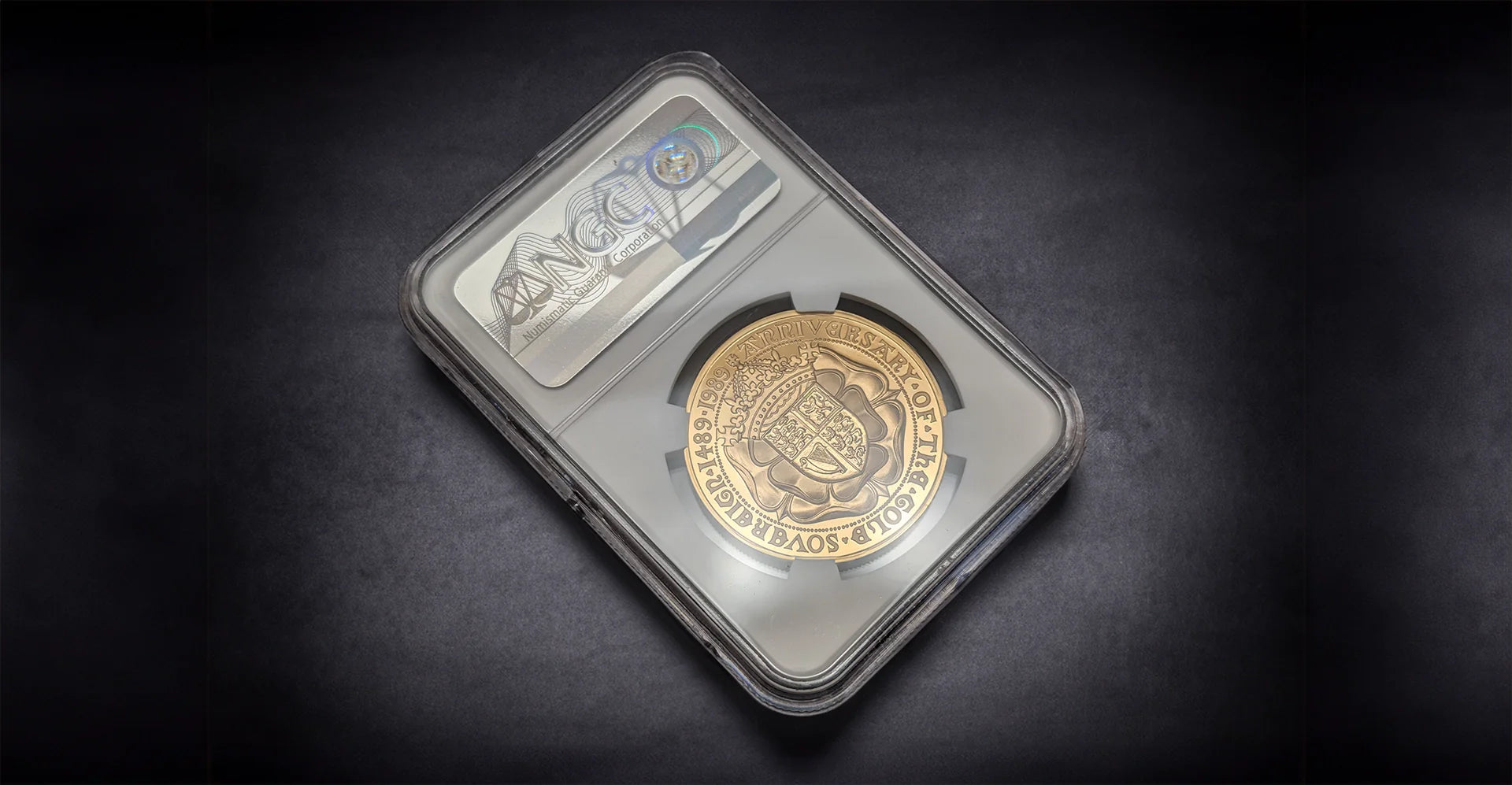
In fact, in our own recent inventory at Sovara Coins, we handled a 2017 200th Anniversary £5 coin that was submitted to NGC as a raw coin and came back slabbed in a holder marked NGC PF70 Ultra Cameo—despite originating from the individual BU presentation box! While an incredible curiosity for collectors, it underscores a crucial lesson: slab labels are typed by humans, and even the world's leading experts can mistake an exceptional BU strike for a Proof.
3. Why Distinguishing Strike Types Matters to Your Wallet
Why does this matter beyond numismatic trivia? Because market values, mintage limits, and collector demand vary dramatically based on official mint designation.
- Mintage Scarcity: The 2017 Proof Quintuple Sovereign was limited to low-mintage set releases, giving it a premium tied to complete set breakdown values. The BU edition had its own distinct mintage figure and retail price point.
- Resale Clarity: Selling a coin as a "Proof" when it is actually a BU issue (or vice versa) can create major transaction disputes, return requests, or compliance issues during professional resale.
- Grading Integrity: When buying graded slabs in the secondary market, top dealers don't just "buy the holder"—they buy the coin. Recognising whether a coin exhibits genuine proof manufacturing characteristics or high-relief BU prooflike surfaces separates standard stackers from elite numismatists.
4. How to Inspect Your Coins Like a Professional Dealer
Before buying or submitting coins for grading, use these three professional checks to evaluate finish and strike:
- Examine Field Reflectivity (The Newspaper Test): Hold a printed piece of text at a 45-degree angle to the coin's background field. A true Proof field will reflect the lettering clearly like a glass mirror. A BU or Prooflike coin will show a soft reflection that distorts or blurs within a centimetre of the surface.
- Check the Step Between Relief and Field: Proof dies hit the blank with intense force, creating crisp 90-degree cliff edges where the frosted portrait meets the mirror field. BU coins often exhibit slight flow lines or rounded transitions at the edges of high-relief devices.
- Cross-Reference Packaging & Certificates: Original outer box packaging, leatherette cases, and COAs (Certificates of Authenticity) carry product codes that explicitly state whether a piece was sold as part of a Proof Set breakdown or an individual BU release.
The Takeaway: Just as dynamic pressure ratings on a dive watch don't equal diving depth, a coin’s strike type isn't a grade. Understanding the engineering behind Proof and Brilliant Uncirculated strikes ensures you buy smarter, grade accurately, and protect your capital in the numismatic market.