For the serious collector, a Sovereign is more than just a piece of gold; it is a historical artifact. But how do we quantify that history? Why is one Victorian Sovereign worth its weight in bullion, while another—identical to the naked eye—is worth a small fortune?
The answer lies in the science of grading. At Sovara Coins, we specialize in NGC-certified gold, and this guide will take you inside the grading process to understand exactly what those numbers mean, from the "Top Pop" modern proofs to the battle-hardened survivors of the 19th century.
Also see Our complete guide to NGC and PCGS graded gold.
1. The NGC Journey: What Happens to Your Coin?
When a coin arrives at the NGC (Numismatic Guaranty Company) headquarters, it undergoes a rigorous, multi-step process designed to eliminate bias and ensure absolute accuracy.
Step 1: Verification
The coin is removed from its packaging and assigned a unique barcode. At this stage, it is "blind"—the graders have no idea who owns the coin, ensuring total impartiality.
Step 2: Authenticity & Conservation
Specialists examine the coin to ensure it isn't a "contemporary counterfeit." If the coin has "environmental damage" (like PVC residue), it may be sent to NCS for professional conservation before grading.
Step 3: The Grading Room
At least two professional graders examine the coin independently under 5x to 10x magnification. They look for "lustre," "strike," and "surface preservation." If they disagree, a senior grader makes the final call.
Step 4: Encapsulation
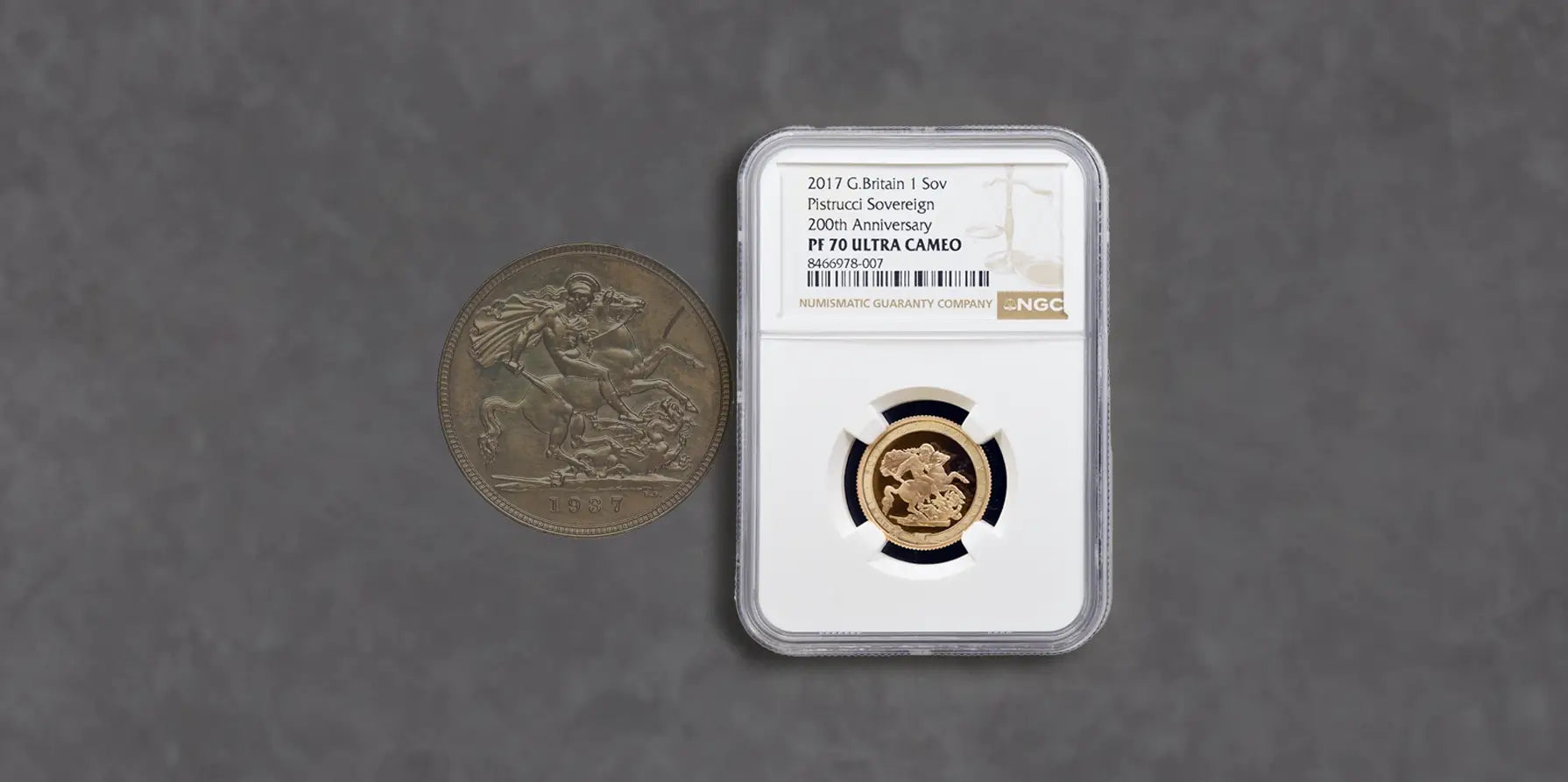
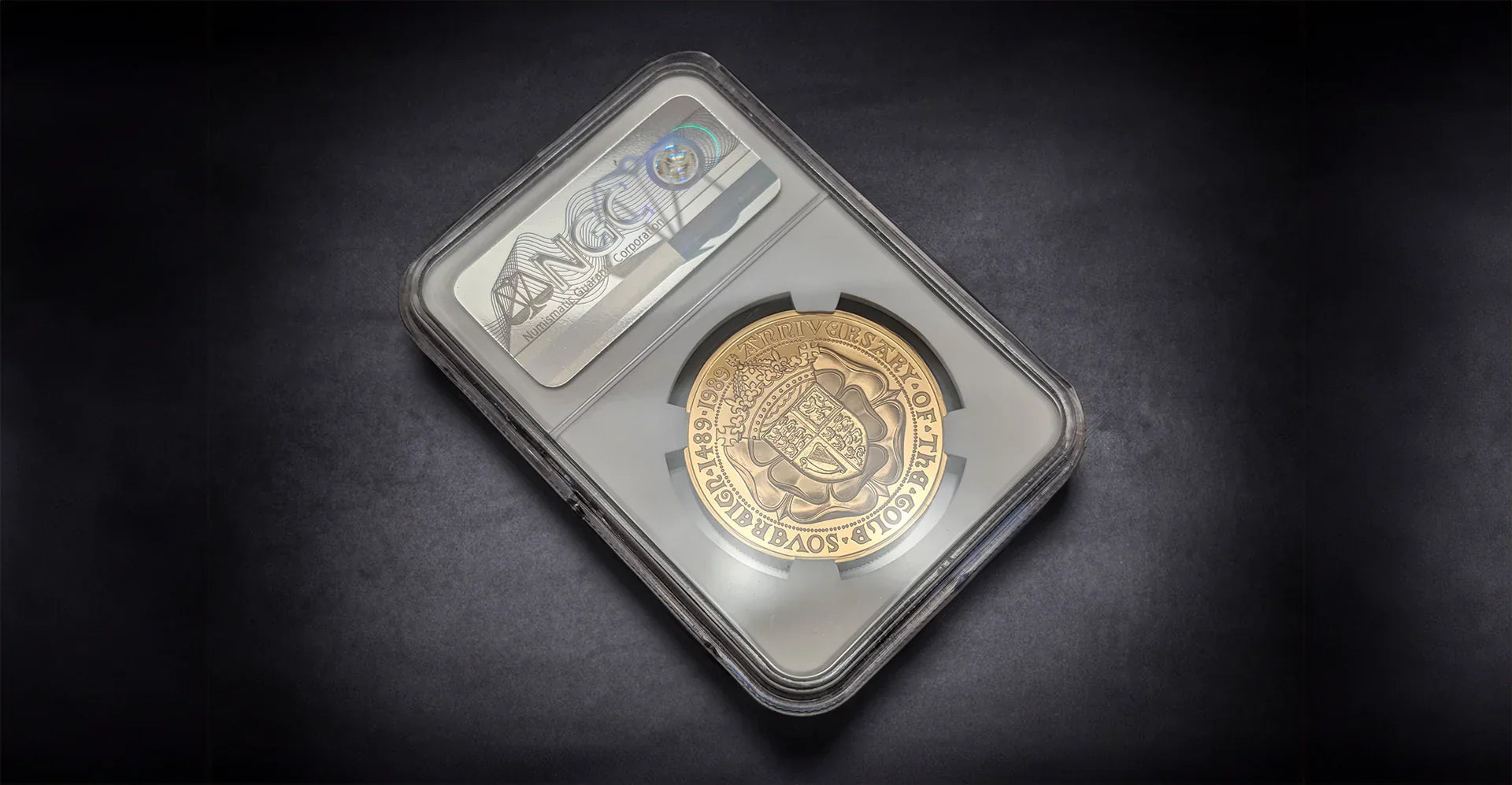
Once the grade is set, the coin is sonically sealed in a tamper-evident "slab" with a high-security hologram, protecting it from oxygen and oils for decades to come.
2. Modern Proofs: The War Between 69 and 70
In the modern era (1980–Present), perfection is the benchmark. For a "normal person," a PF69 and a PF70 look exactly the same. Here is what is actually happening under the microscope:
- PF70 (The Perfect Coin): Has no post-production imperfections at 5x magnification. It is as it left the die. In rare sets like the 1989 500th Anniversary or 2002 Shield Back, a PF70 can command a 300% price premium over a 69.
- PF69 (Near-Perfect): A fully struck coin with nearly imperceptible imperfections. This is often the "standard" high grade for modern proofs.
The "Ultra Cameo" Distinction: For modern proofs, the grade is only half the battle. You want the "Ultra Cameo" (UC) label. This means the contrast between the frosted portrait and the mirrored fields is so sharp it looks like a black-and-white photograph.
3. Vintage Sovereigns: What is a "Good" Grade?
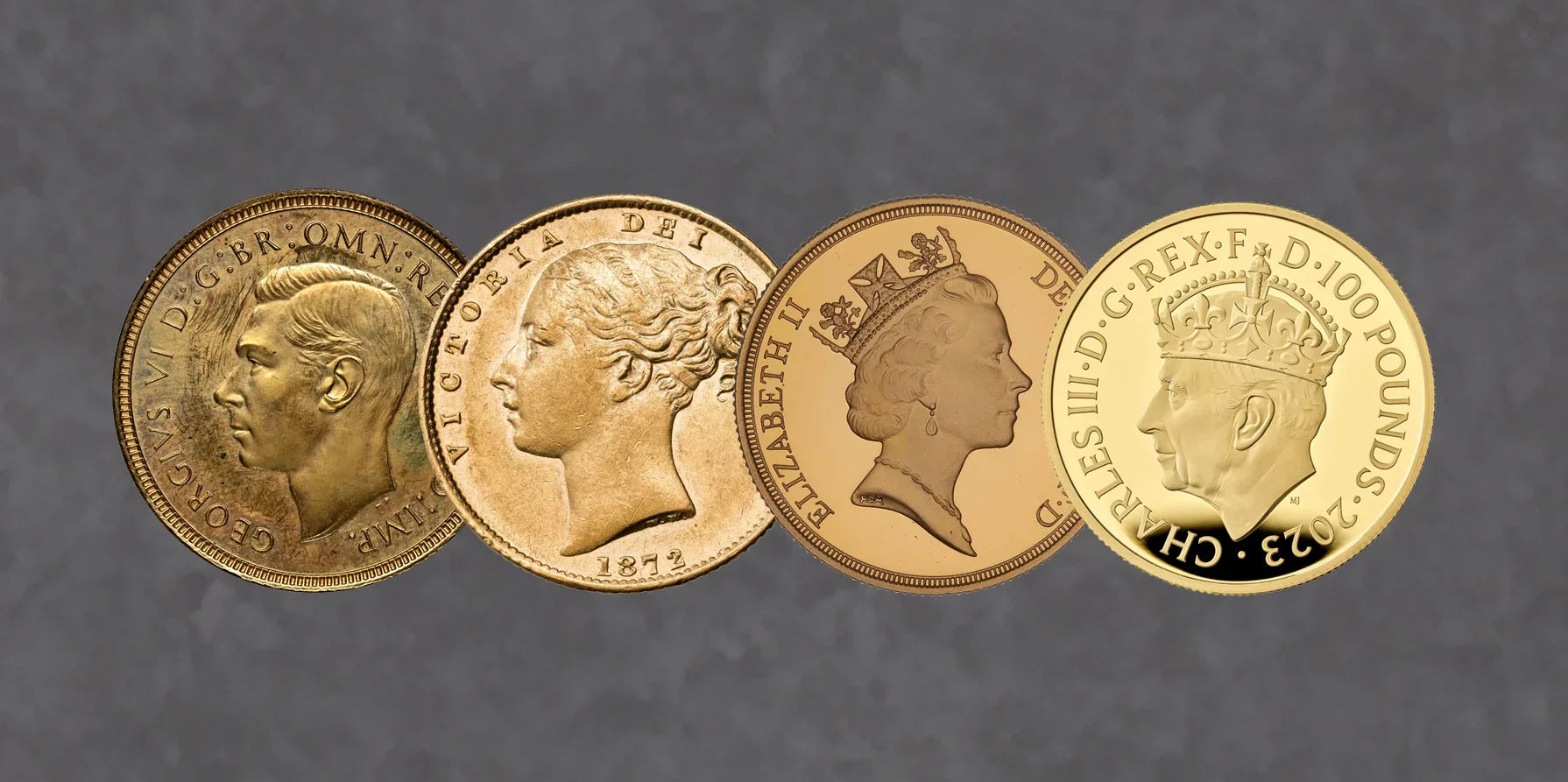
If you are collecting Victoria, Edward VII, or George V Sovereigns, the scale shifts. These coins were "workhorses" of the British Empire. Many spent years in silk purses or leather pouches.
The "Uncirculated" Threshold (MS60 - MS70)
For an older Sovereign (e.g., an 1872 Shield Back), an MS60 (Mint State) is considered the entry point for serious collectors. It means the coin never entered general circulation. However, "bag marks" (small nicks caused by coins clashing together in Mint bags) are expected.
- MS64: This is often the "sweet spot" for vintage gold. It shows great lustre and minimal distracting marks.
- MS65+: These are "Gems." Finding a Victorian Sovereign in MS65 or higher is incredibly difficult because gold is a soft metal; even a slight rub can drop a grade.
The 1937 George VI Rarity
The 1937 Proof Sovereign is a masterpiece, but "70s" are almost non-existent. Why? Because the minting technology of 1937 often left tiny "planchet marks" or "hairlines" during the striking process. For a 1937 Sovereign, a PF66 or PF67 is considered a spectacular, world-class grade.
4. Why Grade at All?
Beyond the price, grading provides Peace of Mind. When you buy a "Raw" (ungraded) coin, you are trusting the seller's eyes. When you buy an NGC-slabbed coin from Sovara, you are trusting a multi-billion dollar guarantee of:
- Authenticity: Guaranteed gold content and origin.
- Protection: The coin will never degrade further in its holder.
- Liquidity: An NGC PF70 is the same in London as it is in New York or Tokyo. It is a universal language of quality.
Ready to explore graded sovereigns? Browse our full certified collection — or if you're considering selling, our free valuation service uses the same NGC census data discussed in this guide. For a deeper look at the grade that matters most, read our PF70 vs PF69 comparison guide.