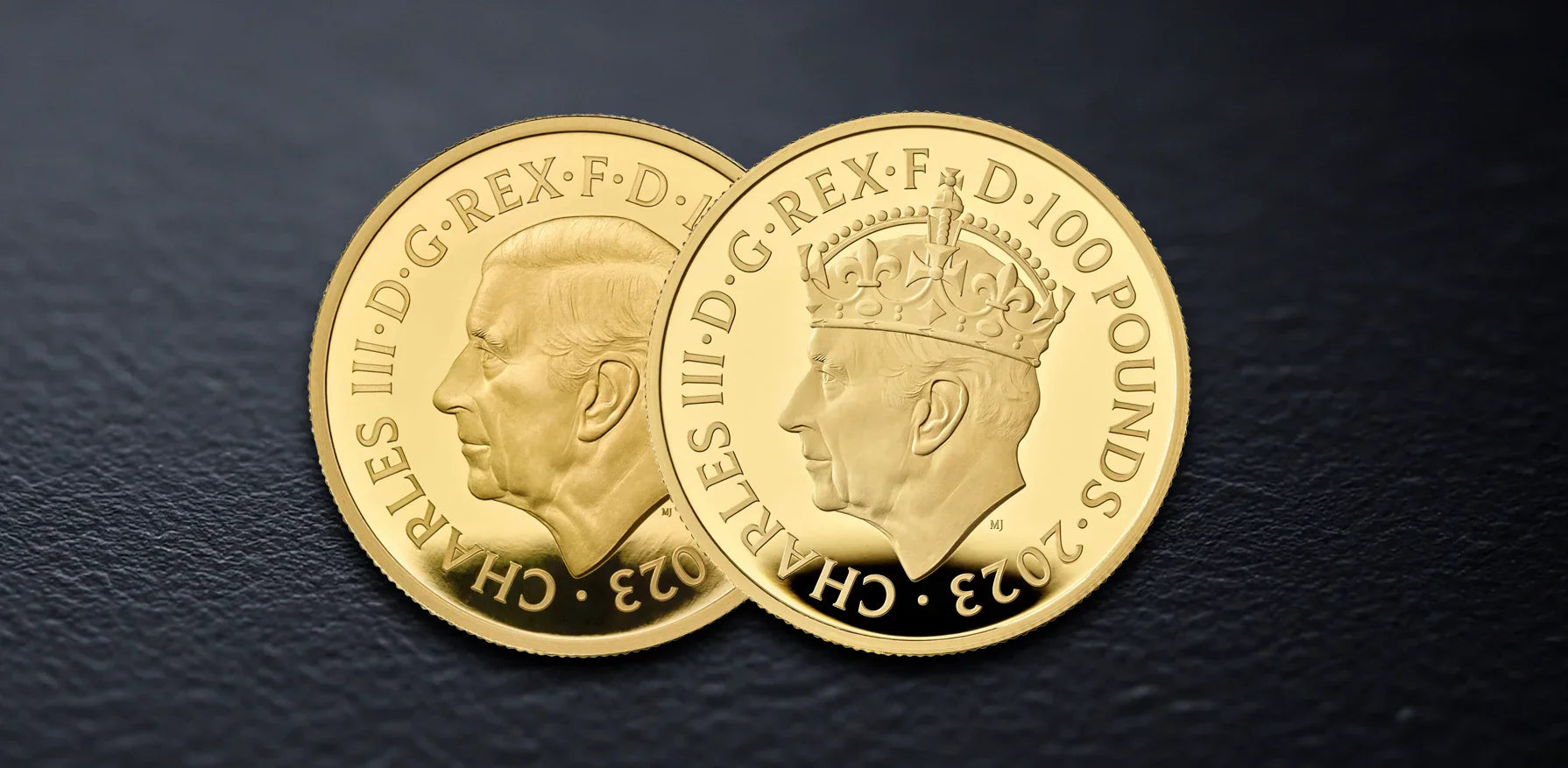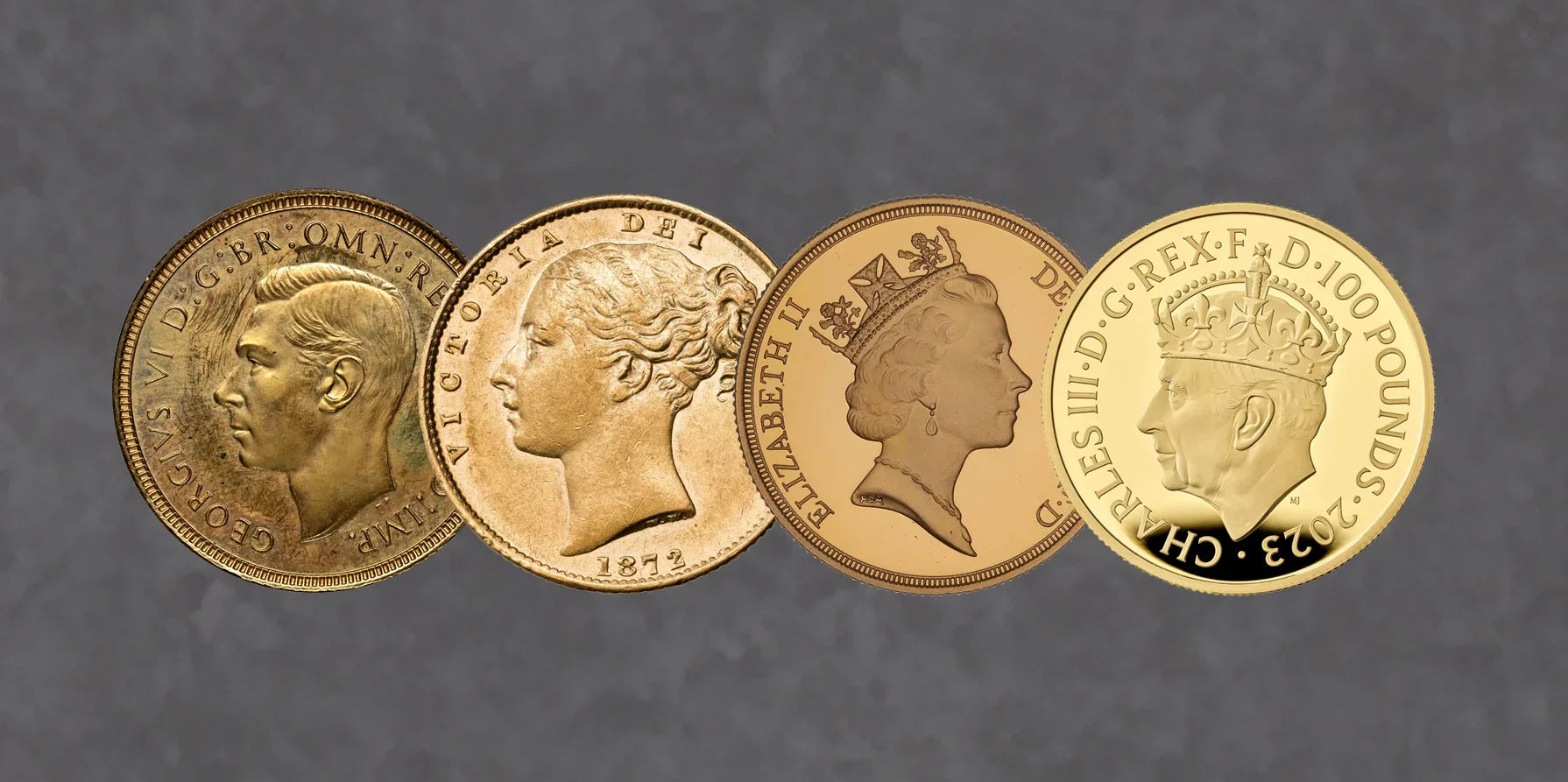
Pick up a modern Sovereign from the reign of King Charles III, and you'll see His Majesty facing left. Place it next to a Sovereign of Her Late Majesty Queen Elizabeth II, and you'll see her facing right.
To the casual observer, this alternating direction is just a design choice. To the seasoned numismatist, it is the continuation of an unbroken tradition dating back to 1660 - a tradition born out of spite, sustained by royal decree, and defied by only one king in history.
But the direction a monarch faces is only half the story. Since the rebirth of the modern Gold Sovereign in 1817, the portraits stamped onto British gold have been a canvas for royal vanity, artistic rivalries, and public scandal. Let's decode the fascinating, often turbulent history of the Sovereign's obverse.
The Origin of the "Turncoat" Tradition
The strict rule of alternating profiles began with King Charles II in 1660. Following the English Civil War, Oliver Cromwell (the Lord Protector) had ordered his coinage portrait to face left. When Charles II restored the monarchy, he was so determined to literally "turn his back" on the man who executed his father that he demanded his coins face right.
From that moment, an unwritten royal law was forged: Every new monarch must face the opposite direction of their predecessor.
1817–1901: The Demanding Royals
George III (Faces Right) & George IV (Faces Left)
When the modern Sovereign was introduced in 1817, it featured the iconic St. George and the Dragon reverse by Italian engraver Benedetto Pistrucci. However, Pistrucci’s portrait of George III on the obverse was brutally realistic, famously dubbed the "bull head" by a public who found it deeply unflattering.
When his son, George IV, took the throne, the vanity was dialled up. George IV despised Pistrucci's lifelike style and demanded to be portrayed as a Greek god - youthful and handsome, despite being heavily overweight in his later years. He ultimately fired Pistrucci from portrait duties and brought in William Wyon to create a more "flattering" left-facing bust based on a marble sculpture by Francis Chantrey.
Queen Victoria (Faces Left)
Because William IV (facing right) had a relatively brief reign, Queen Victoria inherited the throne and the left-facing profile in 1837. Her 64-year reign resulted in three major portraits, and the public had strong opinions on all of them:
- The Young Head (1838–1887): Victoria loved this youthful portrait so much that she refused to let the Royal Mint update it for nearly 50 years. Eventually, the Mint had to force an update because it was absurd to depict a 68-year-old monarch as a teenager.
- The Jubilee Head (1887–1893): Designed by Joseph Edgar Boehm, this portrait caused a national scandal. It depicted Victoria wearing a crown so comically small it looked like it was balancing precariously on her veil. The public mocked it relentlessly, and it was replaced just six years later.
- The Old Head (1893–1901): A dignified, veiled portrait mourning Prince Albert, which remained until her death.
1901–1952: The Great Rebellion
Edward VII (facing right) and George V (facing left) faithfully maintained the tradition. But in 1936, the system broke.
The Vain Rebel: King Edward VIII
Tradition dictated that Edward VIII should face right. However, Edward was incredibly vain about his appearance and firmly believed that the left side of his face - where his hair was parted - was his "best side." He blatantly defied the 276-year-old rule and demanded his trial coins face left.
Edward abdicated before these coins could enter mass circulation. When his brother, George VI, ascended the throne, he was left with a dilemma. George VI chose to restore order by facing left - acting as if Edward had followed the rules and faced right. Today, the handful of left-facing Edward VIII pattern Sovereigns are among the most expensive and mythical coins in the world.
The Modern Era: The Five Faces of Elizabeth II
Because her father faced left, Queen Elizabeth II faced right. Over her record-breaking 70-year reign, she became the most minted face in human history. For Sovereign collectors, her reign provides the ultimate "Type Set," mapped out across five distinct definitive portraits:
- The Mary Gillick (1953–1967): A highly romanticized, uncrowned portrait. Fun fact: Traditionalists at the time complained that the truncation (the bottom cut of the neck) looked like the Queen’s shoulder had been "chopped off."
- The Arnold Machin (1968–1984): Introduced to help the public identify new decimal coins. Machin famously insisted the Queen sit for him multiple times so he could sculpt from life, resulting in a beautifully deeply contoured effigy.
- The Raphael Maklouf (1985–1997): Maklouf was heavily criticized by the press for "making the Queen look too young" while simultaneously giving her what looked like a prominent double chin. Maklouf defended himself, stating his goal was to create a "regal symbol," not a photograph.
- The Ian Rank-Broadley (1998–2015): A deliberate shift toward realism. Rank-Broadley intentionally made the portrait massive, filling the entire canvas of the coin. His logic was practical: a larger portrait was harder to forge and took longer to wear down in circulation.
- The Jody Clark (2015–2022): The final portrait, created by the youngest engraver ever commissioned by the Mint. Clark was just 33 and famously created his initial sketches digitally on an iPad.
Explore our curated collection of Elizabeth II Portrait Sovereigns here.
The "Bare Head" Rule: Why Kings Traditionally Go Without a Crown
If you look at the Sovereigns of George IV, William IV, Edward VII, George V, and George VI, you will notice a consistent theme: unlike the Queens, the Kings are all depicted "Bare Headed" (uncrowned). This isn't a coincidence - it's a deep-seated numismatic tradition for the modern Sovereign that lasted over 200 years.
While Queens are historically shown with tiaras, diadems, or crowns to emphasize their status as "The Mother of the Nation," male monarchs have traditionally opted for a more classical, Greco-Roman style. This "Bare Head" portrait was meant to convey a sense of understated power and a connection to the classical world.
The 2023 Historic Exception
For centuries, the only way to see a British King wearing a crown on a coin was to look at "Colonial" issues intended for India or Africa. That changed in 2023. To mark the Coronation of King Charles III, the Royal Mint broke two centuries of tradition by releasing a Crowned Portrait Sovereign for domestic use.
This makes the 2023 Coronation Sovereign a unique "Type" coin. It is the only modern Sovereign in history to feature a crowned male monarch, sandwiched between the 2022 Memorial and 2024 Standard issues, which both returned to the traditional "Bare Head" style. For collectors, this one-year-only design is the ultimate trophy.
A New Era: King Charles III
With the ascension of King Charles III, the Royal Mint unveiled the first new monarch portrait of the 21st century, crafted by sculptor Martin Jennings. Honouring the ancient rule, the King faces left, turning away from his mother's right-facing profile.
Jennings also strictly adhered to another royal tradition: unlike Queens, who are frequently depicted wearing tiaras or diadems, British Kings are almost never shown wearing a crown on their standard coinage. The result is a clean, classic effigy that bridges modern minting technology with a 350-year-old royal legacy.
Own the Art of the Sovereign
Building a "Type Collection" based on monarch portraits is the pinnacle of numismatics. Whether you are hunting for a flawless Machin Proof 70 or securing a first-year King Charles III Sovereign, Sovara Coins provides the finest graded examples in the UK.
Enter The Portrait Gallery