Struck on the Day Sovereigns: The Complete Guide
Of all the special editions The Royal Mint has released in the modern Sovereign series, none carry quite the same appeal as a genuine Strike on the Day coin. Struck within a single 24-hour window to mark a specific royal event or national anniversary, these coins occupy a unique place in Sovereign collecting — part commemorative issue, part historical artefact. This guide covers what a Strike on the Day (SOTD) Sovereign actually is, every edition issued since the programme began in 2012, and why the published mintage figure is often only part of the story.
What Is a Strike on the Day Sovereign?
A Strike on the Day Sovereign is a Sovereign produced by The Royal Mint on the exact calendar date of the event it commemorates — a royal birthday, wedding anniversary, coronation, or national milestone — rather than at any point during that year, as with a standard annual issue. The Royal Mint's own collector division confirms the concept: SOTD coins are minted on the same day as an important national event or anniversary, in strictly limited numbers, and often carry certificates confirming the exact date of striking.
A few features distinguish SOTD Sovereigns from the standard annual coin, though these have evolved over the life of the programme:
- A single-day production window. Striking begins at midnight and must be completed by the end of that same day — Royal Mint staff confirmed that for the 2017 200th Anniversary SOTD, operators started at 12am and had to complete the full run by 11:59pm.
- Brilliant Uncirculated (or matte) finish. SOTD coins are not struck to proof standard. Most are BU, and several more recent editions carry a satin-matte finish rather than a mirror-brilliant one.
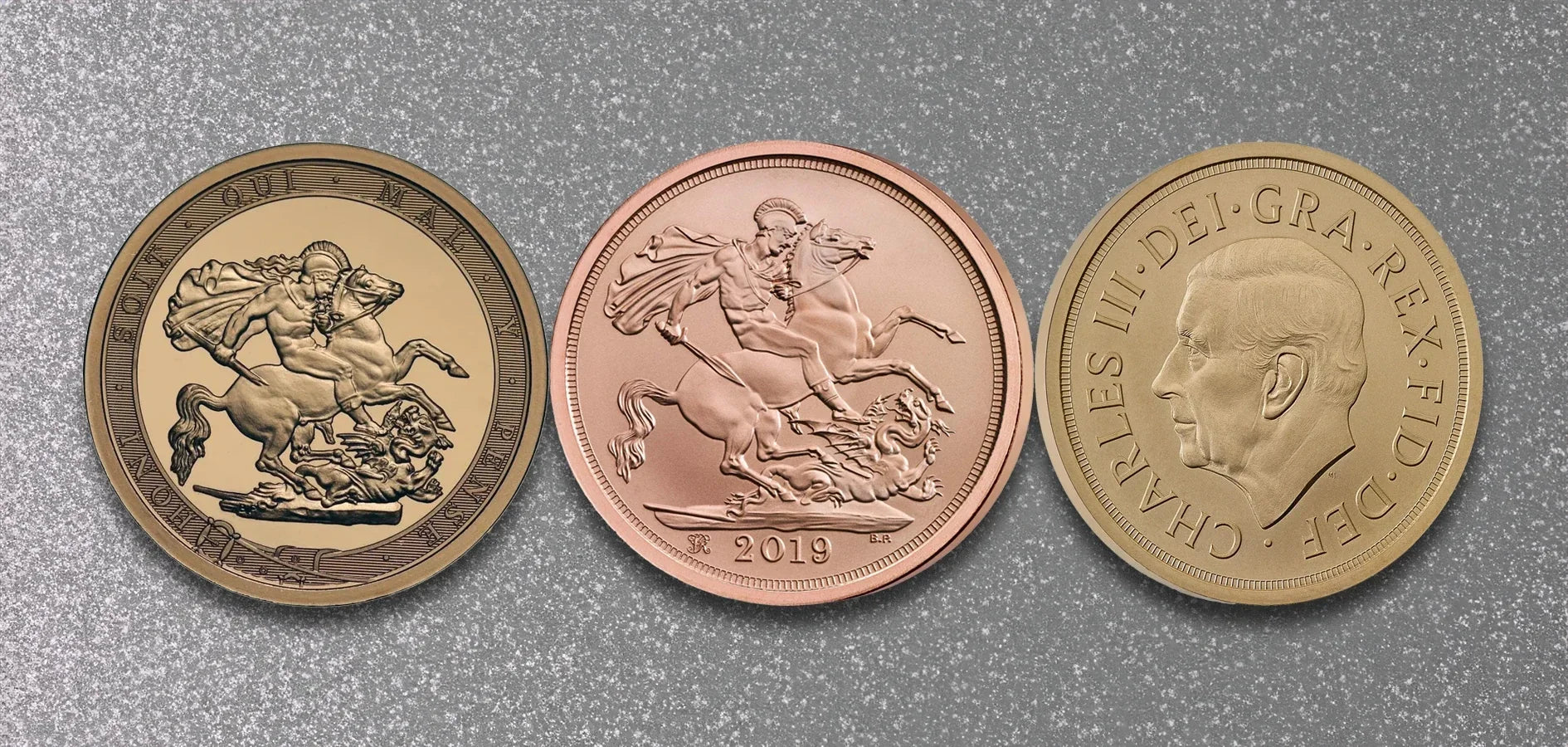
- Edge and privy marks — introduced gradually, not all at once. This is a detail worth getting right: SOTD coins issued between 2012 and 2016, and even the first two 2017 issues (Sapphire Jubilee, Platinum Wedding), carry the standard milled edge and no special privy mark at all — they're visually identical to a normal-year Sovereign, distinguished only by their numbered certificate and the exact date recorded on it. The plain edge was introduced specifically alongside the 1 July 2017 200th Anniversary coin's garter design change, and only became the consistent norm across every SOTD release from 2018 onward. Distinct event-specific privy marks follow a similar pattern, appearing occasionally from 2018 and becoming standard from around 2019–2020.
The programme began in 2012, with the first SOTD Sovereign struck to mark Queen Elizabeth II's Diamond Jubilee. Since then, The Royal Mint has issued more than twenty editions across royal births, birthdays, jubilees, a coronation, a national political milestone, and a wartime anniversary — with more confirmed for 2026.
The Complete List: Every Strike on the Day Sovereign, 2012–2026
The table below lists every SOTD Sovereign issued to date, with the official Maximum Coin Mintage as published or confirmed by The Royal Mint or its archived product pages. Where independent trade or specialist dealer sources report a different actual number issued, this is flagged separately below the table.
| Date Struck | Event Commemorated | Design / Distinguishing Feature | Edge | Maximum Mintage |
|---|---|---|---|---|
| 2 June 2012 | Elizabeth II Diamond Jubilee | Standard St George and the Dragon (Paul Day reverse variant), no privy mark | Milled | 2,012 |
| 2 June 2013 | Elizabeth II Coronation, 60th Anniversary | Standard St George and the Dragon (Pistrucci), no privy mark | Milled | 2,013 (see note) |
| 22 July 2013 | Birth of Prince George | Standard St George and the Dragon (Pistrucci), no privy mark | Milled | 2,013 |
| 22 July 2014 | Prince George, 1st Birthday | Standard St George and the Dragon (Pistrucci), no privy mark | Milled | 400 (see note) |
| 2 May 2015 | Birth of Princess Charlotte | Standard St George and the Dragon (Pistrucci), no privy mark | Milled | 743 |
| 22 July 2015 | Prince George, 2nd Birthday | Standard St George and the Dragon (Pistrucci), no privy mark | Milled | 400 (see note) |
| 11 June 2016 | Elizabeth II, 90th Birthday | Standard St George and the Dragon (Pistrucci), no privy mark | Milled | 500 (see note) |
| 6 February 2017 | Elizabeth II Sapphire Jubilee (Accession, 65 years) | Standard St George and the Dragon (Pistrucci), no distinct privy mark | Milled | 750 |
| 1 July 2017 | 200th Anniversary of the Modern Sovereign | Garter design, remastered 1817 dies (Pistrucci) — a genuine one-year-only design change | Plain | 1,817 (see note) |
| 20 November 2017 | Elizabeth II & Prince Philip Platinum Wedding Anniversary | Standard St George and the Dragon (Pistrucci), no distinct privy mark | Milled | 750 |
| 2 June 2018 | Sapphire Coronation Anniversary (65 years since the Coronation) | St George and the Dragon (Pistrucci), "65" privy mark | Plain | 650 (see note) |
| 22 July 2018 | Prince George, 5th Birthday | St George and the Dragon (Pistrucci) | Plain | 750 (see note) |
| 24 May 2019 | 200th Anniversary of the Birth of Queen Victoria | St George and the Dragon (Pistrucci), with a small privy mark incorporating Queen Victoria's royal cypher | Plain | 650 |
| 26 August 2019 | 200th Anniversary of the Birth of Prince Albert | St George and the Dragon (Pistrucci), intertwined "V & A" privy mark | Plain | 650 |
| 31 January 2020 | UK's Withdrawal from the European Union | St George and the Dragon (Pistrucci), crowned portcullis privy mark | Plain | 1,500 |
| 8 May 2020 | 75th Anniversary of VE Day | St George and the Dragon (Pistrucci), "VE 75" privy mark | Plain | 750 |
| 15 August 2020 | 75th Anniversary of VJ Day | St George and the Dragon (Pistrucci), VJ privy mark | Plain | 750 |
| 12 June 2021 | Elizabeth II, 95th Birthday | St George and the Dragon (Pistrucci), "95" crown privy mark | Plain | 1,295 (see note) |
| 6 February 2022 | Elizabeth II Platinum Jubilee | One-year-only Royal Arms design (Timothy Noad) — a genuine departure from St George | Plain | 1,200 |
| 6 May 2023 | King Charles III Coronation | St George and the Dragon (Pistrucci), paired with a crowned Charles III portrait unique to the Coronation range | Plain | 1,250 |
| 14 November 2023 | King Charles III, 75th Birthday | St George and the Dragon (Pistrucci) | Plain | 750 |
| 6 June 2024 | 80th Anniversary of D-Day | St George and the Dragon (Pistrucci), helmet-and-"80" privy mark | Plain | 1,000 |
| 2026 | 100th Anniversary of the Birth of Queen Elizabeth II | St George and the Dragon (Pistrucci), Lily Font at Buckingham Palace's private chapel | Plain | 1,000 |
Mintage Cap vs. Actual Issued: The Detail Most Listings Miss
Here's the thing almost no SOTD listing tells you: the "Maximum Coin Mintage" figure The Royal Mint publishes is a cap, not a guarantee. It's the most coins that could be struck in that production window — not necessarily how many actually were, or how many were ultimately sold and issued with a certificate. Several well-documented examples show why this matters, and some of the gaps are larger than you might expect:
- 2 June 2013 Coronation 60th Anniversary: Published cap of 2,013. A specialist Sovereign dealer's own reference data records only 900 as actually issued — less than half the published cap.
- 22 July 2014 Prince George 1st Birthday: Published cap of 400. Trade sources consistently report 398 actually produced — close to the cap, but not exact.
- 22 July 2015 Prince George 2nd Birthday: Published cap of 400. The same specialist dealer's reference data records only 301 sold — under three-quarters of the cap.
- 1 July 2017 200th Anniversary SOTD: Published cap of 1,817 (a figure deliberately chosen to echo the year 1817). Independent trade records consistently report 1,786 actually issued.
- 22 July 2018 Prince George 5th Birthday: Published cap of 750. Trade mintage data (via Spink's guide to British decimal coinage) puts the actual issued figure at just 485.
- 2 June 2018 Sapphire Coronation SOTD: Published cap of 650. Based on our own sourcing experience in the trade, we estimate the true number actually struck and issued sits at roughly 320 — making it one of the scarcest SOTD Sovereigns in the entire series relative to its advertised cap. We want to be transparent that this is a trade estimate rather than an official Royal Mint or Spink-published figure, but it's consistent with the pattern seen across the other verified examples above.
This pattern exists because SOTD coins are genuinely struck within a single day — if demand, production capacity, or time runs out before the cap is reached, the run simply stops. Unlike a standard limited edition, where the Mint typically strikes right up to the stated number over an extended period, a Strike on the Day cap is really an upper limit on what was possible in the time available, not a target the Mint necessarily hit.
The practical takeaway: when comparing SOTD Sovereigns, the published mintage cap is a useful starting point, but it can meaningfully overstate true mintage — in some cases, by more than half. Where trade or published data suggests a lower actual figure, that's the number that matters for genuine scarcity.
Why Collectors and Investors Value SOTD Sovereigns
- Genuine event provenance. A SOTD coin wasn't just issued in a commemorative year — it was physically struck on the actual date of the event, giving it a direct, verifiable link to a specific moment in history.
- Small, capped runs. Even at published cap figures, most SOTD editions sit well below 1,000 coins — several early Prince George/90th Birthday issues are under 500.
- Distinct physical markers on later issues. From 2017 onward, the plain edge makes a SOTD coin instantly distinguishable from a standard-year Sovereign, even before checking any certificate.
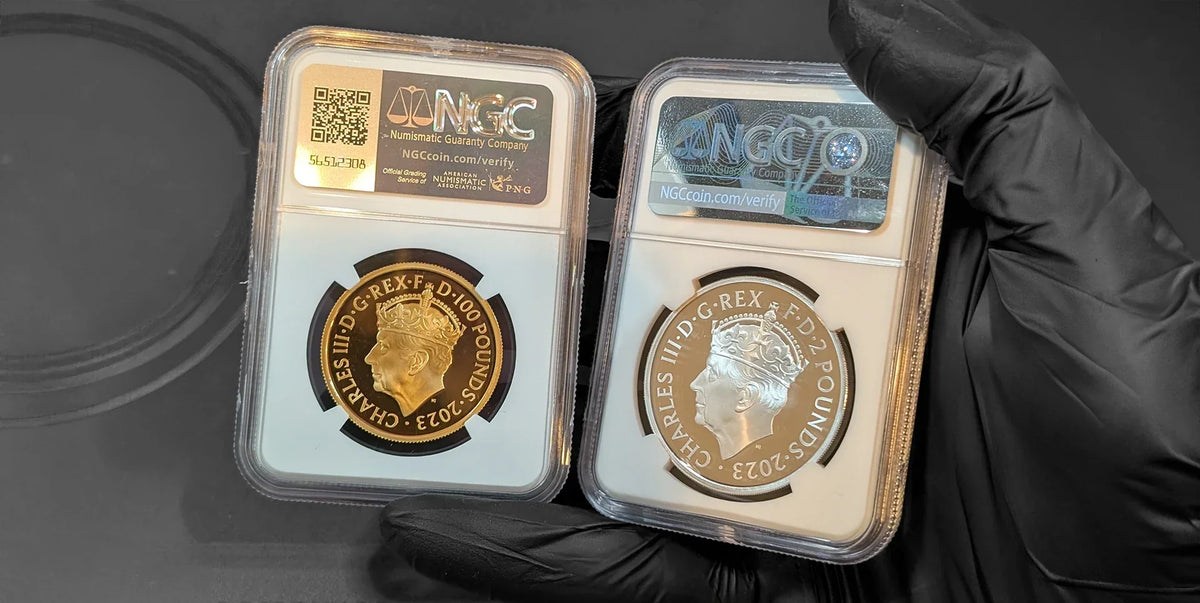
- Strong grading potential. Because SOTD coins are BU rather than proof, a top NGC or PCGS grade (MS70) is a genuine achievement rather than an expected outcome, and top-pop SOTD coins command a significant premium over raw examples.
What to Look For When Buying a SOTD Sovereign
- The certificate of authenticity. Every genuine SOTD coin should be accompanied by a numbered Royal Mint certificate confirming the exact date of striking — some editions come hand-signed by the Mint's Head of Production.
- The edge — but only as a check for 2017 onward. A plain edge is a useful visual confirmation for any SOTD coin from 2017 onward. For 2012–2016 issues, a milled edge is correct and expected — don't mistake it for a standard-year coin.
- Any privy mark. From 2018 onward, several editions carry a small additional mark unique to that release — check it matches the specific event before assuming a coin is misattributed.
- Actual issued figures where available. As shown above, the published cap isn't always the full picture, and in several cases the gap is substantial — worth checking whether independent trade sources report a lower actual mintage for the specific coin you're considering.
Browse our full range of graded gold Sovereigns, including our current Strike on the Day stock, to see which of these editions we have available now.