The Gold-Plated Trap: How to Avoid Gilded Silver Coin Scams
In the numismatic world, the most dangerous scams don't involve "fake" coins from overseas. Instead, they involve genuine Royal Mint products being intentionally misrepresented. Specifically, we are seeing a rise in the "Gilded Swap" - where official Silver-Gilt (gold-plated silver) proofs are being placed into Solid Gold Proof packaging.
To the untrained eye, these two coins look identical. They are both official Royal Mint releases. They both feature the same exquisite design. But the difference in value is thousands of pounds.
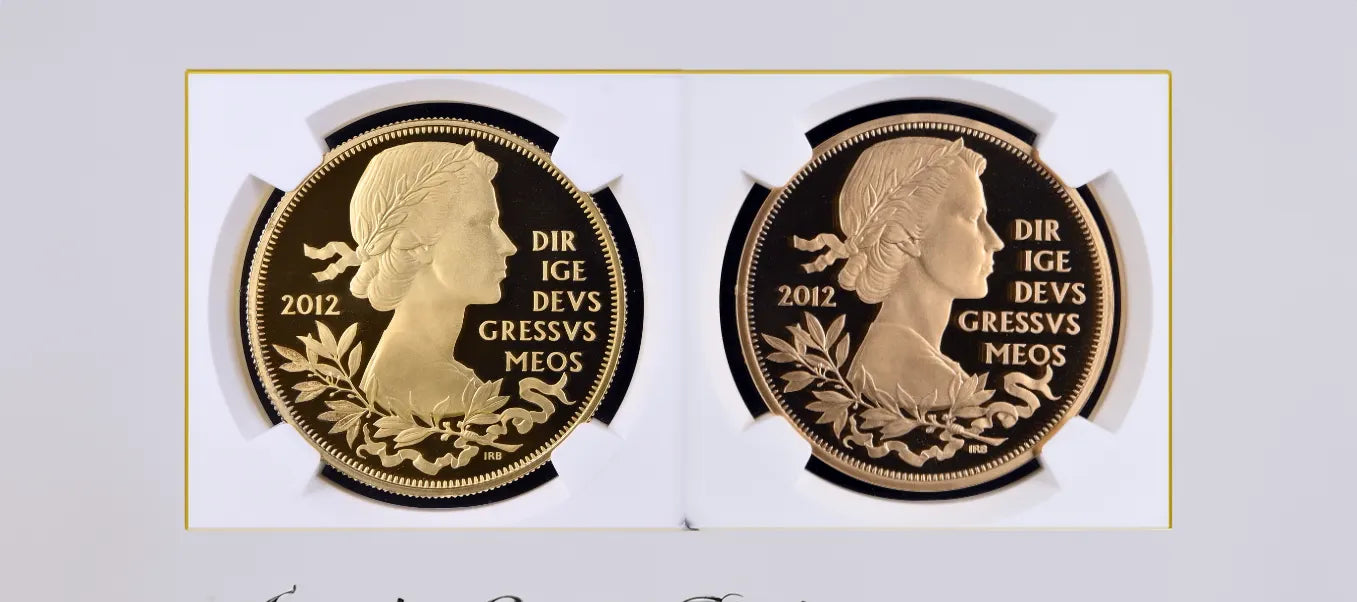
A Tale of Two Genuine Coins: The 2012 Diamond Jubilee £5
The 2012 Diamond Jubilee £5 is the "perfect" target for this swap. The Royal Mint released two versions that look nearly identical to the casual observer:
- The Silver-Gilt Proof: A genuine silver coin plated in gold by the Mint. (Current value: approx. £50-£80)
- The Solid Gold Proof: Struck in 22-carat gold. (Current value: approx. £4,000+)
Scammers buy the cheaper Silver-Gilt version, remove it from its original box, and place it inside a genuine wooden presentation case meant for the Solid Gold version. Because the coin is "Official Royal Mint," it passes a visual inspection. It fits the capsule perfectly. It has the correct luster. It even matches the design on the Certificate of Authenticity (COA) provided in the box.
Why the Swap is So Effective
Most collectors are taught to never open a capsule. Scammers rely on this fear. By keeping the coin sealed, the buyer never feels the weight difference. For the 2012 £5 Crown, the difference is massive:
- Silver-Gilt Weight: 28.28 grams
- Solid Gold Weight: 39.94 grams
An 11-gram difference is huge, but as long as the coin stays in that plastic shell, the deception remains hidden.
The Warning Signs: How to Protect Yourself
If you are buying a "raw" gold coin in a box from a secondary market or auction, you must be hyper-vigilant. Look out for these red flags:
- The "Bargain" Price: If a solid gold proof is listed for 20% under the current market rate, ask why.
- No Weight Verification: A reputable dealer will always be happy to show the coin on a calibrated scale. If a seller refuses "to protect the capsule," be wary.
- The Edge Detail: Sometimes (though not always), the thickness or the milling on a silver-gilt coin differs slightly from the gold version.
Why Grading is the Only True Safeguard
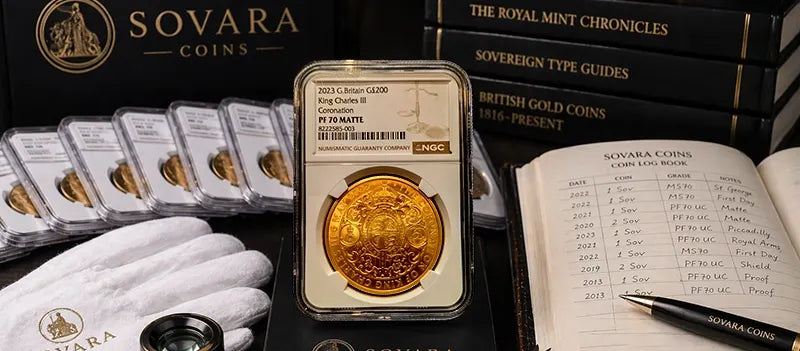
This "Official Swap" is exactly why Sovara Coins champions third-party grading (NGC/PCGS). When a coin is submitted for grading, it is professionally weighed and tested for metal composition using non-destructive technology.
An NGC holder doesn't just tell you the grade; it confirms the Metal Content. You can’t swap a silver-gilt coin into a gold-labeled NGC holder. Once it is sonically sealed, that coin’s identity is locked to its certification number forever.
"In a market where genuine products are being used to deceive, authentication is your most valuable asset."