An Extraordinary Find: The 2023 2oz Gold Matte Proof Coronation Coin Retained Strike-Through Error
Modern high-tier numismatics rarely delivers genuine, jaw-dropping surprises—especially when dealing with ultra-low mintage flagship releases from top-tier institutions like The Royal Mint. However, a remarkable piece recently landed on the desk: a 2023 King Charles III Coronation 2oz Gold Matte Proof Coin featuring a dramatic Struck-Through Retained Foreign Object error along the upper rim.
In the world of modern error collecting, struck-through errors on gold proof coinage are exceptionally scarce. A retained struck-through error—where the foreign material remains permanently embedded in the coin—is virtually unheard of on a modern sovereign or flagship gold issue.
What Is the Error and How Did It Happen?
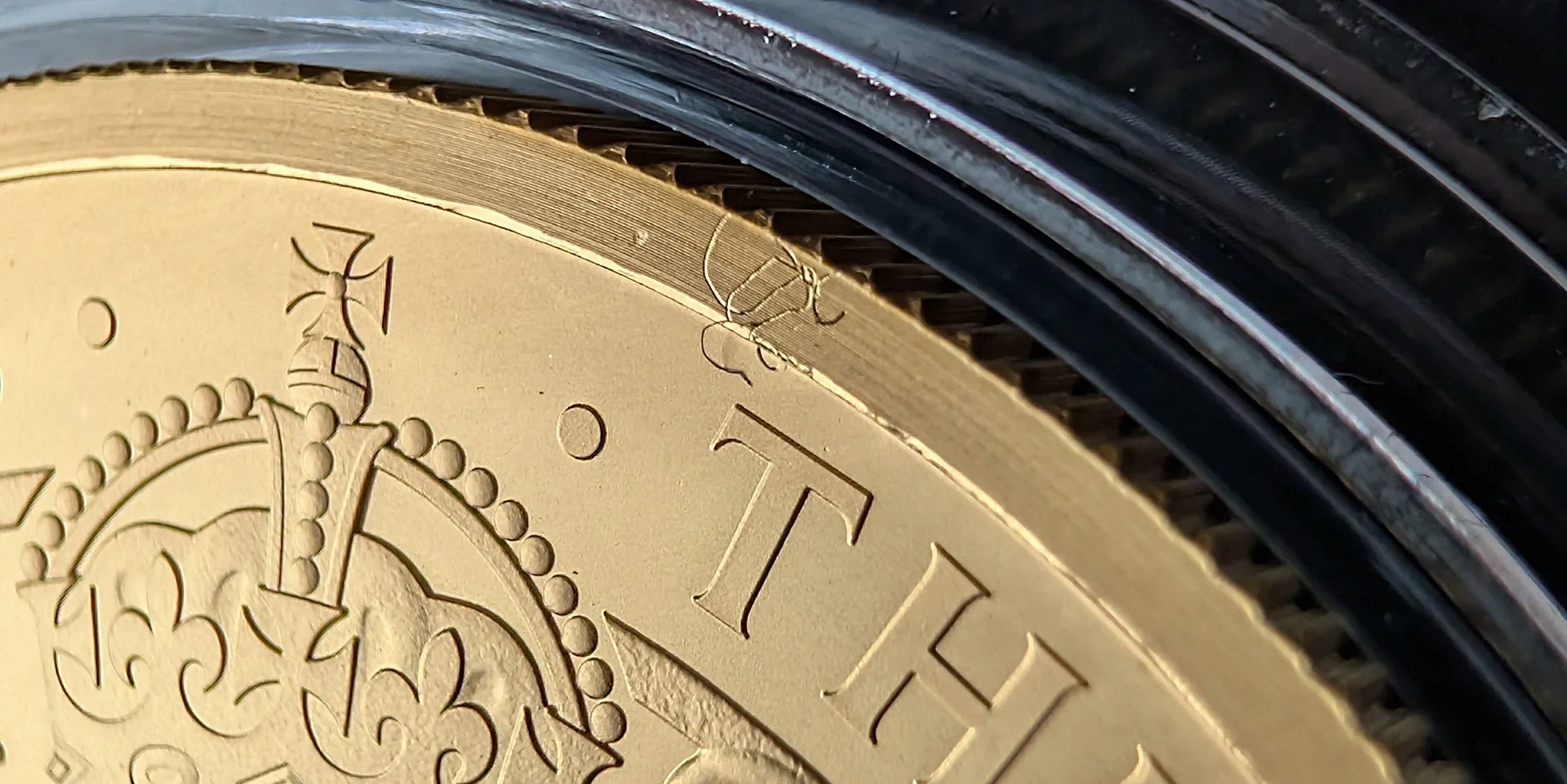
The coin exhibits a clear, incuse channel along the raised outer rim where a foreign strand was struck directly into the 999.9 fine gold surface under immense pressure. Even more astonishing, the foreign material—what appears to be a black synthetic polymer thread or filament—remains wedged inside the impression.
In numismatic grading terms, this is classified as a Struck-Through Retained Foreign Object (or Retained Debris Error).
The Physics of the Strike
- Contamination: Prior to striking, a loose synthetic fiber (likely originating from protective gloves, equipment seals, or airborne garment debris) settled onto the blank gold flan or adhered to the upper working die near the collar.
- High-Pressure Striking: Proof and matte proof coins are struck multiple times at extreme hydraulic pressures to bring out razor-sharp relief and precise surface texturing. As the dies descended, the synthetic fiber was compressed directly into the gold rim.
- Retention: On standard struck-through errors, the foreign body flies off after coining, leaving behind only a negative impression. Here, the extreme pressure folded the surrounding gold rim around parts of the filament, trapping it permanently within the metal.
Why Quality Control Should Have Caught It
The Royal Mint’s commemorative proof department operates under strict cleanroom-style protocols. Flagship coins—especially massive 2-ounce gold issues—pass through multiple rigorous inspection checkpoints:
- Pre-Strike Flan Inspection: Blanks are individually polished, washed, and hand-inspected prior to entering the coining chamber.
- Post-Strike Human QC: Every individual proof coin is visually audited under magnification by skilled technicians trained to spot minute surface hairline scratches, spots, or strike imperfections.
- Packaging Verification: Before being sealed inside its protective acrylic capsule and fitted into its luxury presentation box, the coin undergoes a final visual pass.
For an object as obvious as a dark thread embedded across the bright rim of a 40mm gold coin to bypass every stage of human and optical quality control represents a fascinating statistical anomaly.
Why Modern Proof Errors Are Exceptionally Rare
While mint errors are relatively well-documented on high-speed circulating bullion or general circulation coinage—where millions of blanks move through automated hoppers per hour—they are near-nonexistent on low-mintage flagship proofs.
The 2023 2oz Gold Matte Proof Coronation Coin is an extraordinarily low-mintage issue. Matte proof finishes are reserved for high-end collectors, requiring specialized sandblasting die preparations that yield a textured, satin-like surface. With mintage figures for matte variants often limited to around 100 pieces worldwide, each coin receives white-glove treatment.
Finding a major mechanical mint error on a coin where only a tiny handful exist globally makes this piece a true "one-of-one" candidate for error specialists and Royal Mint purists alike.
The Capsule Factor: Sealed and Unopened Since 2023
How does an error like this stay hidden for years?
When collectors purchase high-value 2oz gold proof coins directly from The Royal Mint, the standard practice is to keep the coin sealed inside its factory acrylic capsule, place the display box in a cabinet or safe, and treat it as a long-term store of value.
The original purchaser of this coin likely received the parcel in 2023, verified the Certificate of Authenticity, and tucked the wooden box away without ever removing the capsule lid or inspecting the edge under magnification. It wasn't until the coin was closely evaluated under high-intensity lighting that the embedded strand and incuse rim channels were revealed.

Preserving a Numismatic Anomaly
When handling a retained error, preservation is paramount. The temptation to clean, nudge, or swab the rim must be avoided at all costs—a single touch could dislodge the embedded fibre, converting a legendary retained error into a standard struck-through mark.
This piece represents a rare convergence: historic Royal Mint royalty, ultra-low mintage 2oz gold format, and a dramatic, factory-certified mint error trapped in time beneath the acrylic.